
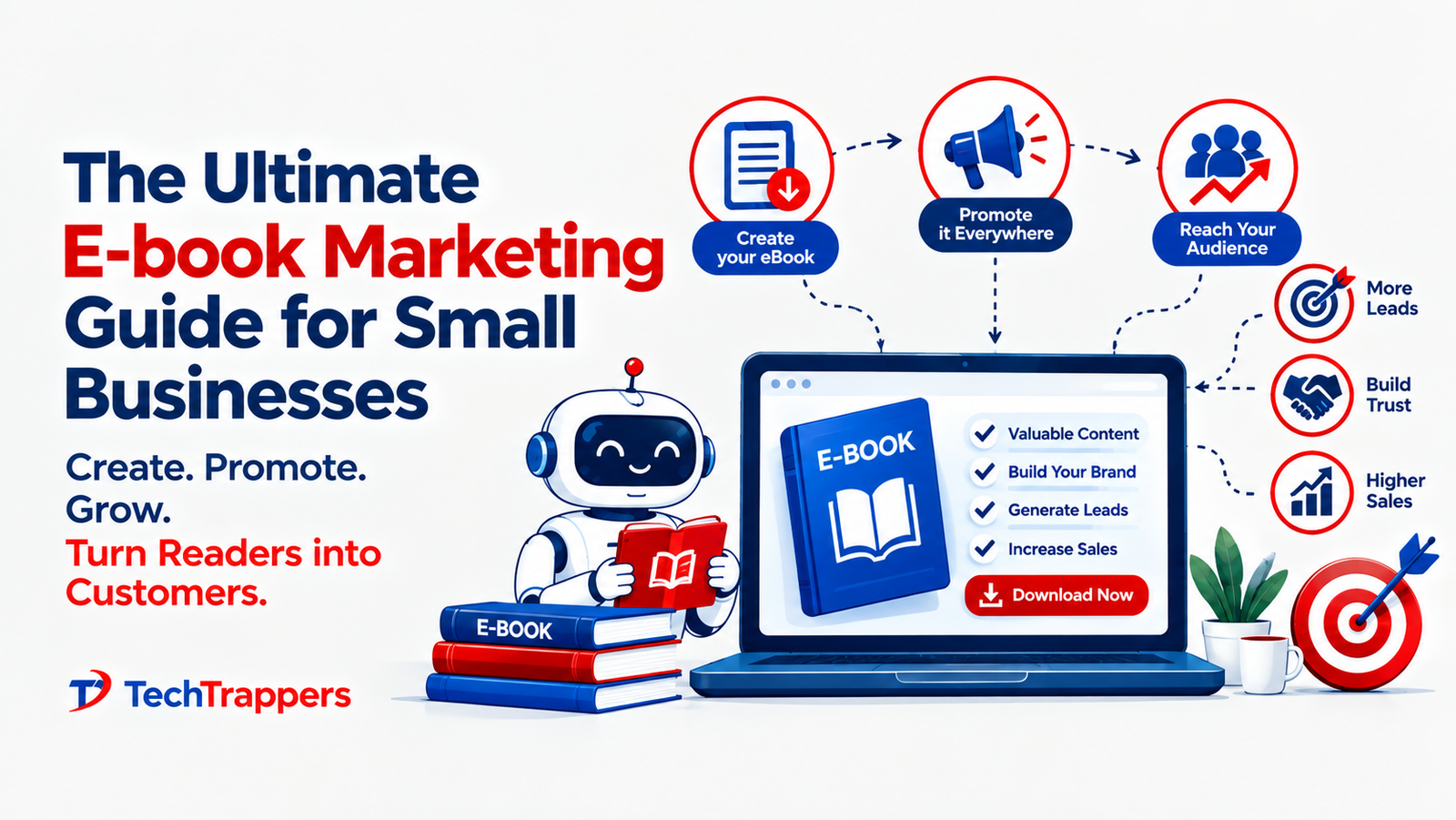
Most small business owners know they need better ways to attract customers, yet many still rely only on social media posts or occasional ads. An e-book offers a smarter alternative. It packages your expertise into a useful digital asset that builds trust, captures leads, and supports long-term growth.
This ultimate e-book marketing guide for small businesses walks you through every stage from choosing the right topic to measuring real results so you can create and promote a business e-book that actually works.
Why Small Businesses Need an E-book Marketing Strategy
An e-book gives small businesses a professional way to share knowledge without constant daily posting. Readers who download it already show interest in your topic. That interest often converts into email subscribers, consultation requests, or sales.
Unlike short social posts, a well-written e-book stays available online and continues generating value months after you publish it. For resource-limited teams, this one asset can outperform dozens of scattered posts.
Step 1 – Set Clear Goals for Your Business E-book
Start by deciding what success looks like. Common goals for small businesses include:
- Collecting email addresses for a newsletter
- Educating potential clients about a service
- Supporting a product or seasonal offer
- Positioning the owner as a local expert
Write your main goal in one sentence. This clarity guides every later decision about length, tone, and promotion.
Step 2 – Choose a Topic That Solves a Real Problem
Pick a specific problem your ideal customers face. The best topics are narrow enough to be useful yet broad enough to attract interest.
Examples for small businesses:
- “How Local Service Businesses Can Generate Leads Without Paid Ads”
- “A Simple Guide to Pricing Services for Profit”
- “5 Marketing Mistakes That Cost Small Businesses Customers”
Ask yourself: Would someone gladly trade their email address for this information? If the answer is yes, you have a strong topic.
Step 3 – Outline and Write Scannable Content
Create a simple outline before you write. A proven structure includes:
- Short introduction that states the benefit
- Three to six practical chapters
- Real examples or short case studies
- A checklist or action plan
- Clear next step
Write in short paragraphs and everyday language. Use bullet points and numbered lists so readers can scan quickly on phones. Aim for helpful advice rather than perfect prose. Most successful small-business e-books run between 15 and 40 pages.
Step 4 – Design and Format for Easy Reading
Design does not need to be fancy, but it must be clean. Use readable fonts, consistent spacing, and simple visuals such as icons or screenshots.
Export the file as a PDF so people can download and read offline. If possible, also offer an online version that opens in a browser. Both formats improve accessibility and increase the chance readers finish the content.
Step 5 – Create a Simple Landing Page and Offer
Place the e-book behind a short form that asks only for name and email. Keep the landing page focused: one clear headline, a few benefit bullets, and a strong call-to-action button.
Test the page on mobile. Many small-business prospects will view it on their phones.
Step 6 – Promote Your E-book Effectively
Promotion turns a good e-book into a lead-generating machine. Effective low-cost methods include:
- Sharing the offer in your email signature and existing newsletter
- Posting short tips from the e-book on LinkedIn or Facebook with a link
- Asking satisfied clients to share it with their network
- Running a small targeted ad campaign once you know the topic resonates
Consistency matters more than big budgets. Promote the e-book regularly for several weeks after launch.
Step 7 – Track Results and Improve Over Time
Measure downloads, new email subscribers, and any sales or enquiries that follow. Review which chapters people mention most often and update the e-book every six to twelve months with fresh examples.
Small improvements compound. A second edition based on real feedback often performs better than the first.
Common Mistakes Small Businesses Should Avoid
- Writing about everything instead of one focused problem
- Making the e-book too long or too sales-heavy
- Forgetting a clear next step after the download
- Publishing once and never promoting again
Avoid these pitfalls and your e-book becomes a lasting marketing asset rather than a forgotten file.
How TechTrappers Supports Small Business E-book Success
Creating and marketing an e-book takes time many small business owners simply do not have. TechTrappers helps with strategy, writing support, clean design, landing-page setup, and promotion planning. The goal is practical results more qualified leads and stronger marketing performance without requiring you to become a full-time content creator.
Conclusion
An e-book remains one of the most practical marketing tools available to small businesses. By setting clear goals, choosing a useful topic, writing scannable content, designing for readability, promoting consistently, and measuring results, you create an asset that works for you over time.
Ready to turn your knowledge into a lead-generating e-book? Reach out to TechTrappers today and take the first step toward a smarter, more sustainable marketing approach for your small business.