
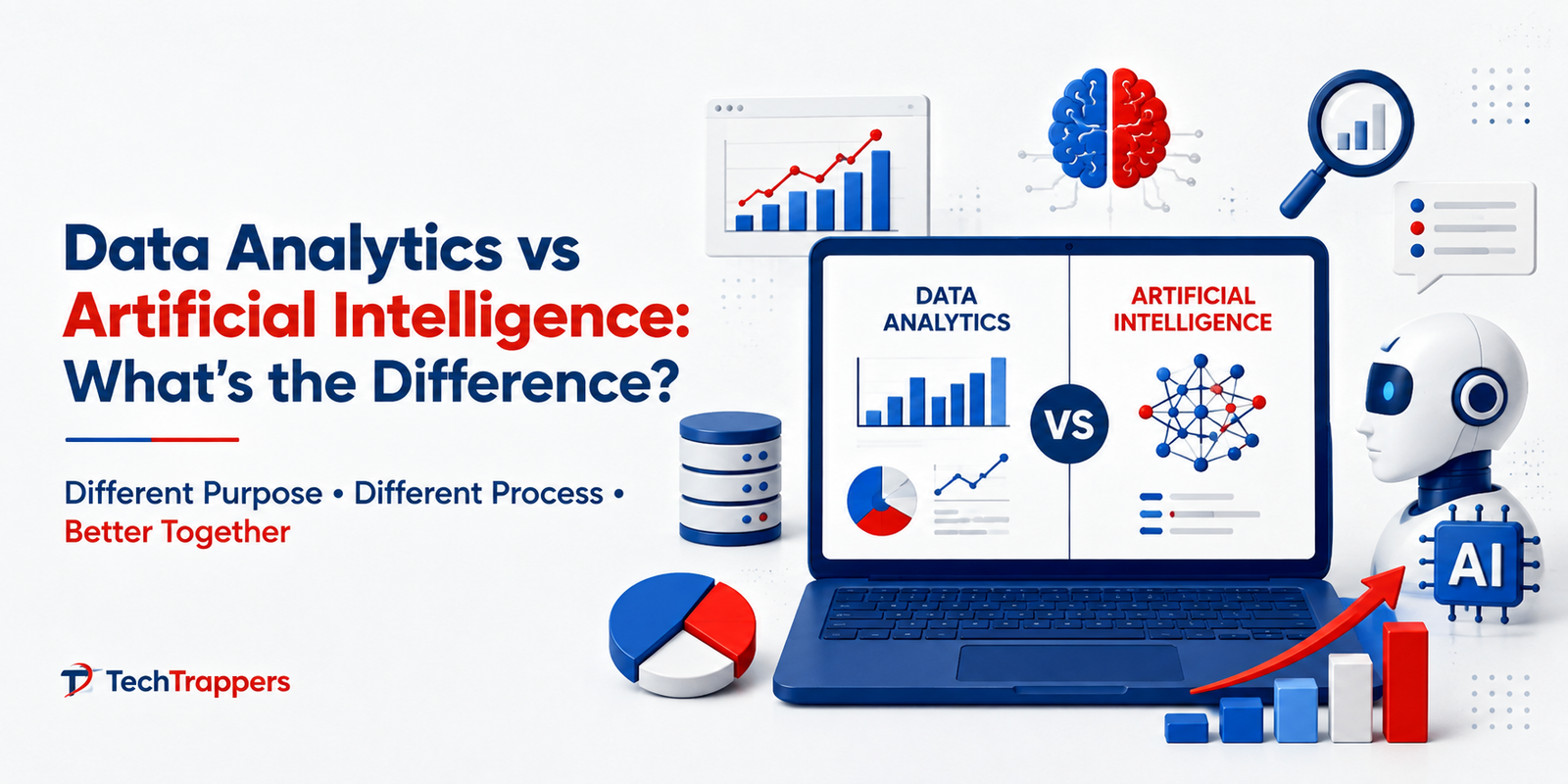
Many business leaders hear “data analytics” and “artificial intelligence” used almost interchangeably. The result? Confusion about which technology actually drives better decisions and stronger marketing performance.
In this clear comparison of data analytics vs artificial intelligence you will learn the core differences, when to use each, how they complement one another, and practical ways they improve digital marketing. By the end you will know how to choose the right approach and how a trusted partner like TechTrappers can help you apply both effectively.
What Is Data Analytics?
Data analytics is the process of examining historical and current data to discover patterns, measure performance, and answer specific business questions.
It focuses on what happened, why it happened, and what is happening right now. Marketers use it to track campaign results, segment audiences, calculate ROI, and optimize budgets. Tools typically include dashboards, reports, and statistical analysis. Data analytics gives teams clear visibility so they can make informed, evidence-based decisions.
What Is Artificial Intelligence?
Artificial intelligence goes further. AI systems learn from data, recognise complex patterns, make predictions, and can even take actions with minimal human input.
In business, AI powers recommendation engines, chatbots, predictive lead scoring, dynamic pricing, and automated content personalisation. It focuses on forecasting what will happen and recommending or executing the best next step. AI is a core part of the future of AI in business because it scales decision-making far beyond human capacity.
Data Analytics vs Artificial Intelligence – Key Differences
Purpose and Approach
Data analytics explains the past and present. Artificial intelligence predicts the future and often acts on those predictions. Analytics answers, “What happened?” while AI answers, “What is likely to happen and what should we do?”
Human Involvement
Analytics requires people to interpret dashboards and decide on actions. AI can automate interpretation and even execute decisions once trained and supervised.
Complexity and Technology
Basic analytics uses spreadsheets, BI tools, and statistical methods. AI relies on machine learning models, neural networks, and large datasets that continuously improve.
Output and Decision Style
Analytics produces reports, charts, and insights that humans act on. AI produces predictions, scores, recommendations, or fully automated actions that improve marketing performance at scale.
Key takeaway: Data analytics gives you clarity. Artificial intelligence gives you speed, scale, and foresight.
How Data Analytics and AI Work Together
The strongest results come when both are used together. Clean, well-structured data from analytics becomes the fuel for AI models. AI then surfaces deeper insights that traditional analysis might miss.
For example, analytics shows which channels delivered the highest ROI last quarter. AI uses that same data to predict which audiences will convert next month and automatically adjusts bids or creative. This combination turns digital marketing from reactive reporting into proactive growth.
Real-World Examples in Digital Marketing
- A brand marketing firm uses data analytics to discover that email campaigns convert best on Tuesday mornings. AI then predicts the optimal send time for each individual subscriber and personalizes subject lines, lifting open rates.
- An online digital marketing company analyzes website behavior (analytics) and deploys AI-powered product recommendations that increase average order value.
- A business digital marketing team tracks ad performance with analytics while AI continuously tests and optimizes ad creatives in real time, improving cost-per-acquisition.
These examples show how data analytics vs artificial intelligence is not an either-or choice both strengthen marketing performance when applied thoughtfully.
Which One Does Your Business Need?
Start with data analytics if you lack clear visibility into current performance or struggle to measure ROI. It builds the foundation.
Add AI when you need scale, personalisation, forecasting, or automation that humans cannot handle alone. Most growing companies benefit from both: solid analytics first, then AI layered on top as data maturity increases.
How TechTrappers Helps Businesses Leverage Both
TechTrappers is a results-focused digital marketing and branding company that combines strong data analytics capabilities with practical AI applications.
Our digital marketing services include full tracking setup, custom performance dashboards, audience insights, and AI-enhanced campaign optimization. Whether you need global digital marketing services or targeted support for business digital marketing, we help clients turn data into clearer decisions and measurable growth. We focus on practical outcomes not hype, so you see real improvements in marketing performance.
Conclusion
Understanding Data Analytics vs Artificial Intelligence helps you invest in the right tools and strategies. Analytics delivers clarity about what is working. AI adds prediction, personalization, and automation that prepare your business for the future of AI in business.
Used together, they create a powerful engine for better digital marketing results.
Ready to move beyond confusion and start making data-driven and AI-supported decisions? Contact TechTrappers today to explore how our digital marketing services and data expertise can improve your marketing performance. Let’s build a smarter growth strategy together